Field notes
Why luxury cosmetics can be a strong RFID test case
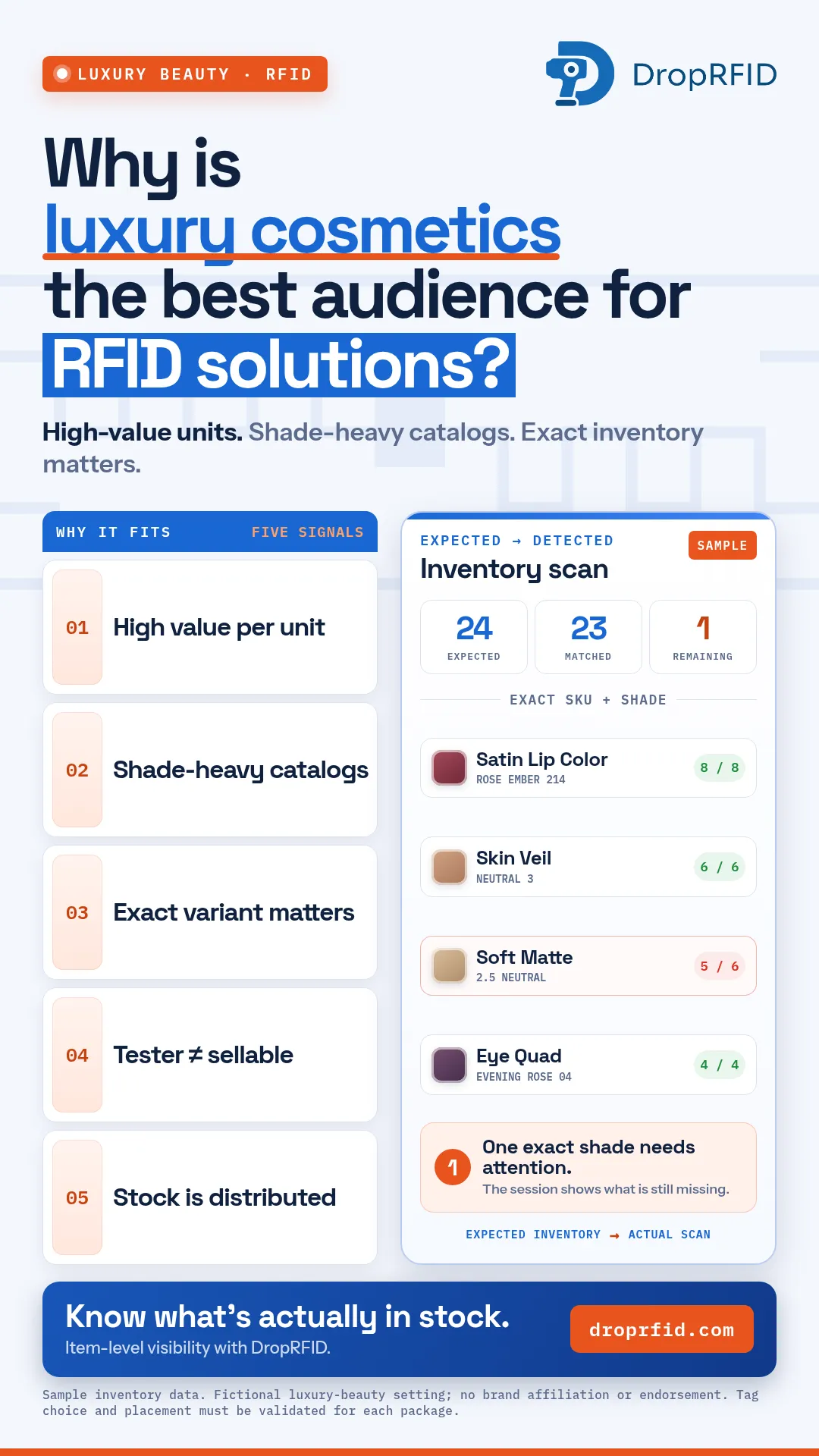
Exact shade and finish variants make cosmetics a useful category for exploring tag placement, scan reconciliation, and inventory identity.
Luxury cosmetics can make inventory identity especially visible. A display may contain multiple shades, finishes, formulas, and package sizes that look similar at a glance. When a workflow needs to distinguish exact variants, a machine-readable tag can complement the visual process.
Variant identity matters
The campaign’s N1–N5 shades and matte, satin, glossy, and shimmer finishes are illustrative category imagery, not a real retailer catalog. The point is the pattern: the expected item is not merely “a foundation” or “a lipstick,” but a particular variant with a particular record.
Each tagged unit can carry a digital identity. A DropRFID scan session compares expected inventory with what was detected and surfaces matched, missing, and unexpected items. That is a session result, not continuous automatic stock truth. The example order and all product names, quantities, SKUs, and tag IDs in the associated footage are fictional.
Test the hard surfaces
Cosmetic packaging often combines small packs, curved surfaces, metalized materials, glass, and liquid-filled containers. Those conditions can affect tag choice, placement, read behavior, and durability. A good pilot tests representative packaging in the actual display, storage, and handling environment.
Use qualified language: a tag may work when its construction and placement are validated, but no generic label guarantees a result on every package. Measure expected-versus-observed behavior, document exceptions, and decide how staff handle a missing or ambiguous read.
Keep the claim proportional
“Best audience” is a campaign question and opinion-led thesis, not a measured ranking of industries. This illustrative opening scene and sample inventory session are not affiliated with or endorsed by any cosmetics brand or retailer. Do not infer reduced shrink, faster service, ROI, or customer results from the demo.
The useful starting question is narrower: where does exact variant identity matter, and what decision should a completed scan support? That might be order verification, receiving, a display count, or a replenishment review. Define the expected records and exceptions first, then test the tag and placement.
For teams exploring the category, DropRFID offers scanner-based session capture, SKU mapping, order comparison, and configurable workflows. Current plan and trial terms should be checked before purchase; the standard trial is 14 days with full feature access and no card required to start, beginning after first scanner activation.
Luxury presentation depends on exact availability. Make the workflow observable, validate the physical details, and let evidence—not a campaign headline—decide where RFID belongs.
The most useful output of an early pilot may be a clearer exception list: which packages need a different label, which display positions need adjustment, and which records deserve human review. That learning is valuable even when the final design uses a mix of RFID, barcode, and visual checks.
It also gives merchandising and operations a shared vocabulary for discussing what “available” means.
That vocabulary can guide replenishment conversations without claiming that the scan replaces every existing control.