Field notes
How RFID could connect a museum object to a digital story
An illustrative exhibit pattern uses a tagged physical object, a read point, and museum-curated content to create a responsive interaction.
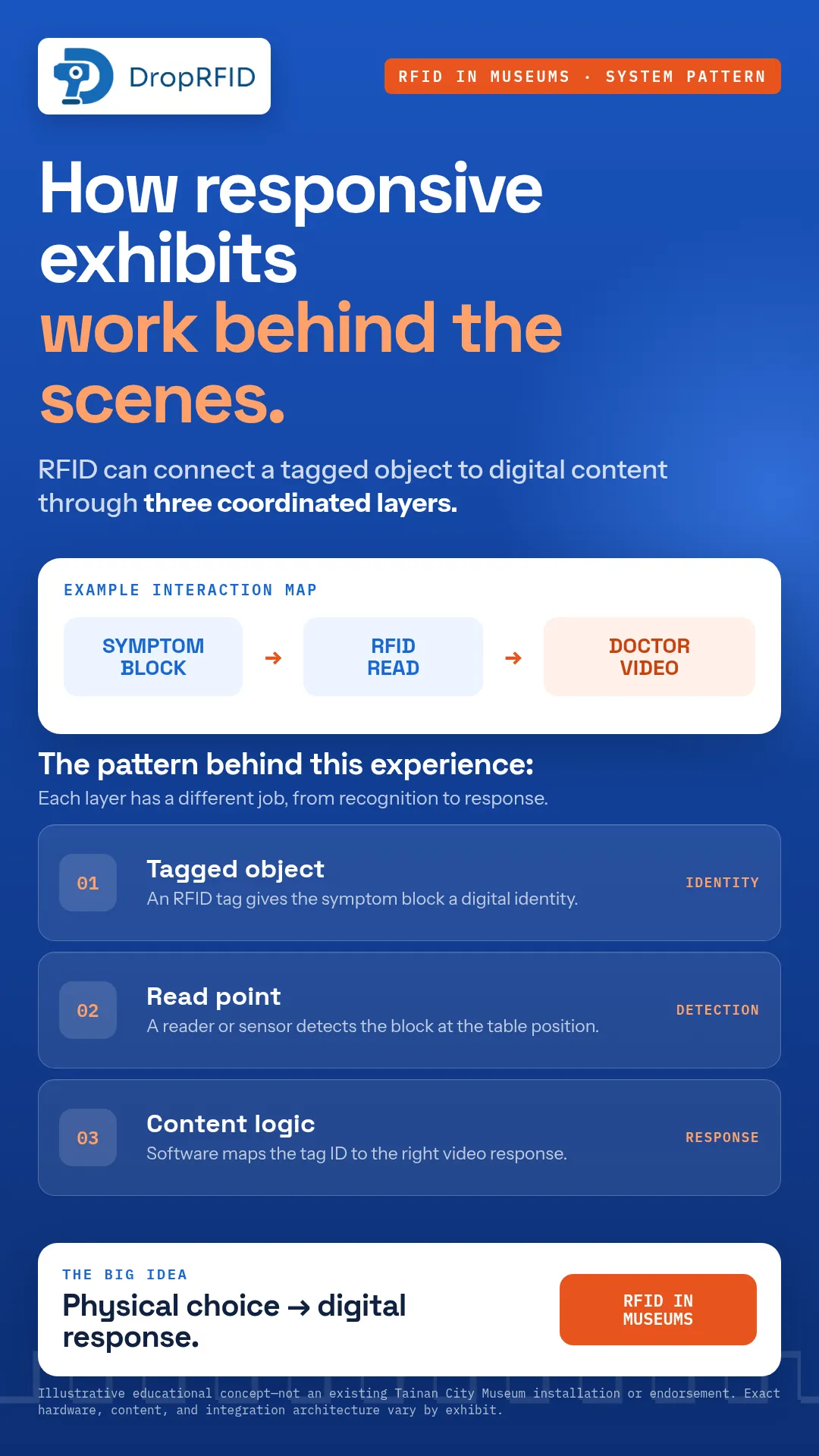
RFID can make a physical object part of an exhibit’s story. A visitor chooses an object, a read point recognizes its tag, and content logic selects the corresponding museum-curated response. The technology can stay behind the scenes while the visitor experiences a simple physical choice.
The symptom-block concept in this campaign is an illustrative educational design, not a current DropRFID installation, medical advice, or a Tainan City Museum endorsement. Any health-related content would require museum approval, qualified review, and clear educational framing.
The three-part interaction
The pattern is straightforward:
- A visitor chooses a tagged or tag-associated object.
- A reader detects the object’s identity at a configured read point.
- Content logic starts the museum-approved video, audio, archival material, or other response linked to that identity.
The tag may be attached to, embedded in, or carried with the object depending on fabrication, conservation, enclosure, and visitor-safety requirements. Exact tag, reader, antenna, playback, and software choices vary by exhibit.
Why the object matters
The physical choice gives the visitor an intuitive control: pick something up, place it, or bring it to the station. The RFID layer supplies a machine-readable identity, while the content system supplies interpretation. That separation can support many stories without asking visitors to operate a complex interface.
It also creates design responsibilities. A museum should decide what the read point does when no tag is detected, when multiple tags are present, or when an object is moved away too quickly. Accessibility, maintenance, network behavior, and a non-digital fallback belong in the exhibit plan.
Prototype before presenting it as fact
The poster and video materials are concept demonstrations. They do not show a deployed system at Tainan City Museum or prove that a doctor-led response exists. Treat them as a way to explain identity → detection → response, then prototype against the actual room, objects, readers, and content review process.
For a real museum project, obtain written permission for names, footage, logos, and institutional references. Review any medical or symptom language with appropriate experts, and never position an exhibit response as diagnosis or personal medical guidance.
The broader lesson is useful beyond museums: RFID can connect a physical choice to a digital record when the complete interaction is designed carefully.
That connection can remain deliberately narrow. A tag can select a content identifier without carrying a visitor profile or exposing personal information. Minimizing what the exhibit stores, and explaining the interaction clearly, helps keep the technology in service of interpretation rather than making it the subject of the experience.
A short rehearsal with staff and visitors can reveal confusing labels, awkward object handling, or timing problems before the exhibit opens.
The result should be tested as an exhibit experience, not only as a reader demonstration.