Guides
Start with a working RFID path, then expand
A modular RFID workflow can begin with Shopify import, scan reconciliation, and documented API or webhook connections before a broader rollout.
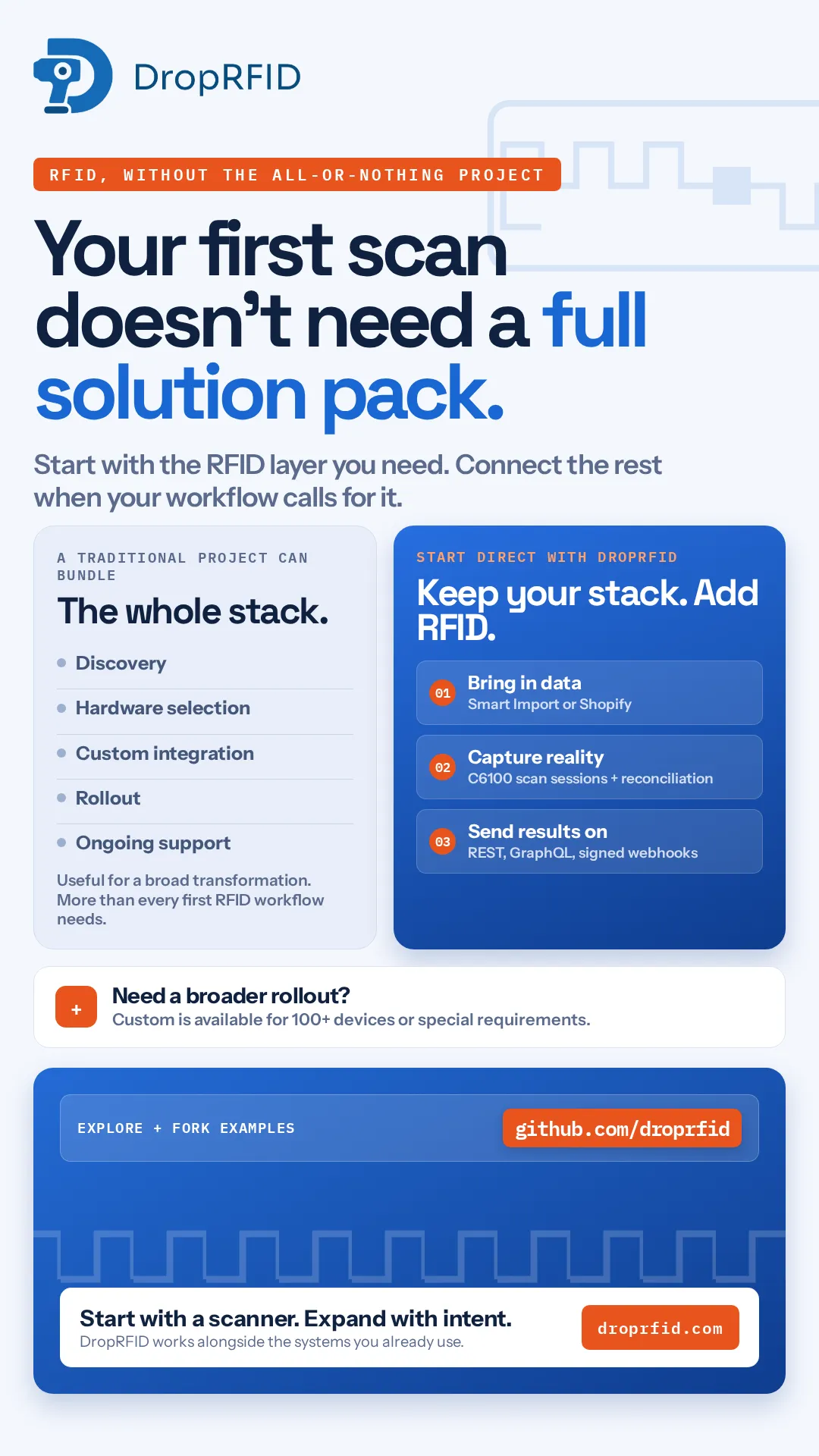
RFID projects are sometimes presented as one large package: discovery, hardware, integration, rollout, and support. That approach can suit a broad transformation. It is not the only way to begin.
Make the first workflow useful
A smaller working path can start with open orders imported from Shopify, a handheld scan, and an expected-versus-observed comparison. The scan can appear in the dashboard with named products as reads arrive. This campaign footage uses real interfaces with synthetic demo data; it is a demonstration of the workflow, not a customer result.
Start with one operational question: can the team verify this order, receiving batch, or inventory location with less retyping and fewer handoffs? Define the expected records, the scan process, and the person responsible for reviewing exceptions. Then test representative tags, materials, and placement.
Keep existing systems in the loop
DropRFID provides open integration surfaces. A server-side service can authenticate with an API key and retrieve data through supported public API operations. The public REST API can read sessions and manage supported SKU and order records; it does not provide public endpoints for creating scanner sessions or ingesting live RFID reads.
When a scan session is complete, a signed session.completed webhook can notify a downstream system with the completed-session snapshot. Use the API when your system chooses when to retrieve data, or use the webhook when it should receive a post-completion notification. They are complementary, not mutually exclusive.
Webhook targets must be publicly reachable over HTTPS. Keep API keys and signing secrets server-side, verify signatures, and make handlers idempotent because delivery can be retried. A webhook is an after-completion event path, not a synchronous accept/reject control loop.
Expand when the evidence is clear
“No lock-in” should mean a practical ability to add the next system or workflow through documented interfaces—not a promise of zero configuration or a universal native connector. Shopify write-back, WMS or ERP reconciliation, BI destinations, and customer-owned AI are configuration-dependent. Validate the data mapping and operating responsibility for each addition.
The campaign’s API-key and webhook screens are mock-backed recordings with synthetic values. Never copy a key from a screenshot, and never publish a live secret.
Build the smallest useful loop, learn where it helps, and expand from evidence. For a starting point, explore the DropRFID documentation and discuss the workflow you actually need.
That incremental approach also keeps ownership clear. Someone should own the expected records, someone should review exceptions, and someone should maintain the integration. A documented handoff is part of a durable workflow, just as important as the reader, tag, API request, or webhook configuration.
It gives the team a concrete basis for deciding what to automate next and what should remain a human review step.