Field notes
An illustrative inventory roll call for Odysseus
A myth-inspired example of creating an order, tagging units, and comparing expected versus scanned inventory.
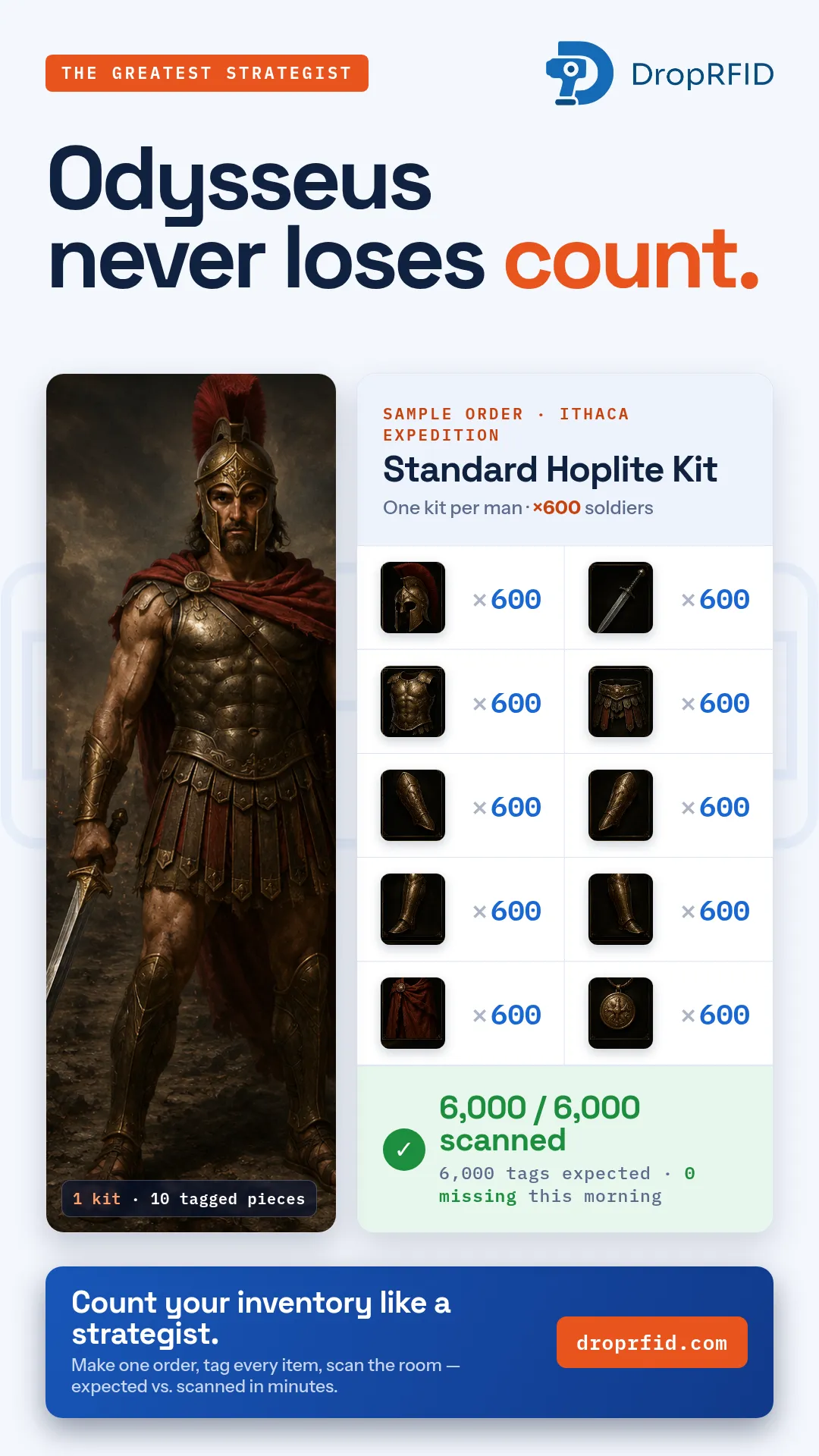
Even the greatest strategist needs a roll call. In this illustrative example, an Odysseus-inspired equipment list becomes a way to show a practical RFID workflow: create an order, map tags to items, scan the physical units, and compare the result with what was expected.
From ten item types to a sample order
The campaign imagines ten equipment SKUs, with an example quantity of 600 for each. That produces a sample expected total of 6,000 units. These are synthetic values for the demonstration, not a report about a historical inventory, a customer, or a real fulfillment operation.
In DropRFID, an order can organize the expected items and quantities. A team can maintain its SKU registry, map RFID tag IDs to products, and use a scan session to review what was observed. The comparison is useful because it puts the expected state and the observed state in the same conversation.
Tag the physical units
The example’s second step is one RFID tag per physical unit. That relationship is what lets a scan resolve to a product or SKU rather than becoming an anonymous count. Real deployments still need sensible tag placement, compatible labels, and a read environment suited to the materials involved.
The campaign then shows a scan session progressing toward the sample total. The final “6,000 expected / 6,000 scanned / 0 missing” state is an illustrative result rendered for the story. It is not evidence of a live operation or a guarantee of perfect counts.
The workflow behind the story
The myth is only the hook. The operational pattern is the point:
- Create or import the expected order data.
- Map RFID identifiers to the relevant SKUs.
- Capture a scan session in the work area.
- Review the comparison and investigate any difference.
DropRFID supports order creation, SKU management, RFID session capture, and expected-versus-scanned review. Shopify sync paths, routines, and connected systems are configuration-dependent; the platform does not replace every warehouse or ERP system by default.
This Odysseus story is an illustrative example, not an affiliation with the mythological character, a museum, a publisher, or any other organization. Use the same discipline in a real workflow: define the expected inventory, measure the read conditions, and treat exceptions as items to review rather than proof of a particular cause.
Count inventory like a strategist at DropRFID.com.
The example also shows why naming matters. A recognizable product name, a stable SKU code, and a tag identifier give operators different ways to reconcile what they see. In production, those values should come from the organization’s own catalog and tag process, with permissions and data handling appropriate to the operation. The illustrated armor images are story assets, not a product catalog or historical record. Treat the numbers as a teaching device and substitute measured, approved data before using a similar story publicly.